
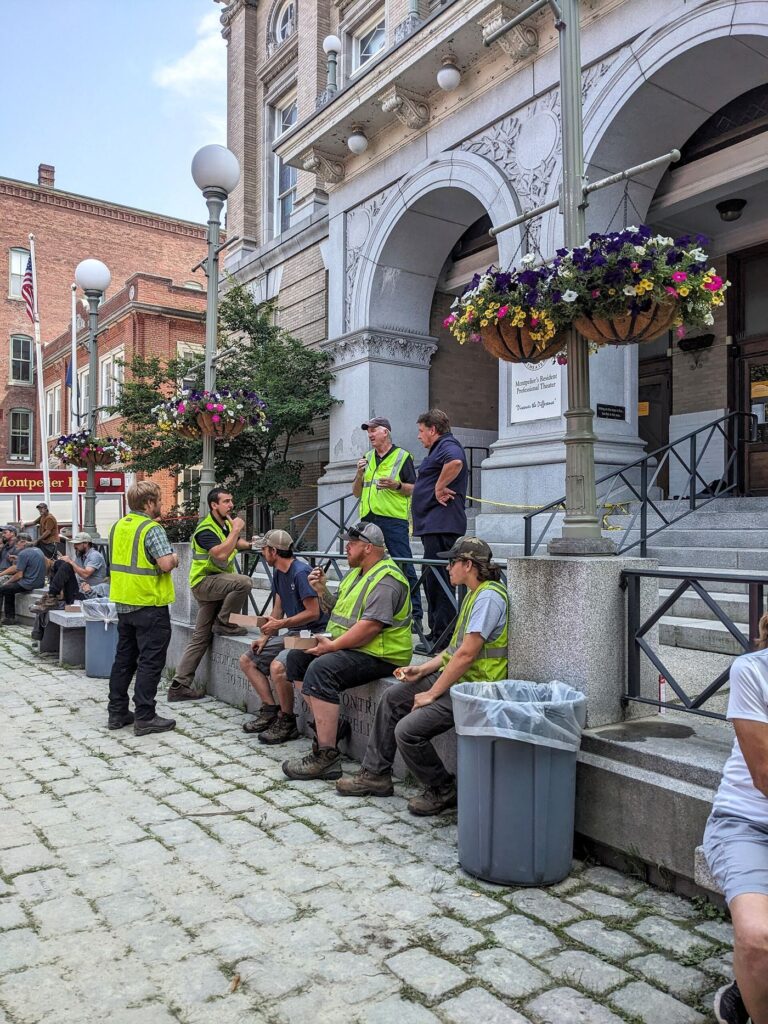
Volunteers have joined council cleanup teams to help clear shops, pavements and community buildings after floodwater receded from the town centre. Coordinators are assigning helpers to tasks that match their strength and experience, from sweeping silt and washing down entrances to sorting damaged stock for local traders. Protective gloves, boots and masks are provided at a central sign-in point, and nobody is asked to enter buildings until safety checks are complete. Shopkeepers say the extra hands have shortened the hardest part of recovery, which is the heavy cleaning that must happen before repairs and restocking can begin. Residents unable to lift or carry are helping in other ways, preparing drinks, staffing phone lines and keeping lists of what each business still needs. Organisers say goodwill fades quickly without structure, so shifts are kept short and every team works to a written plan for its street. Local cafes have offered free meals to teams working through the day, and hardware shops have lent equipment.
What the Evidence Shows
Public health staff remind helpers to wash hands regularly, cover cuts and avoid contact with water that may contain sewage or chemicals. Specialists following volunteer flood cleanup effort say recording volunteer hours matters, because it helps towns evidence the true cost of recovery when seeking support. Traders have set up a shared board listing reopening dates, so customers know which doors are open again. Some volunteers say they will stay involved after the cleanup, joining flood warden schemes that warn neighbours early. A thank-you event is being planned once the final street reopens. Local schools have offered their halls as collection points for cleaning supplies, and delivery drivers are helping move donated items to the streets that need them most. Coordinators say the experience has strengthened ties between businesses that previously barely knew each other. That network, they argue, may prove as valuable as the cleaning itself when the next severe weather warning arrives. Reporting and analysis from sources such as Associated Press track the same developments, and specialists following volunteer flood cleanup effort say the direction is now consistent across independent lines of evidence.
The Wider Context
Regional and local reporting on volunteer flood cleanup effort often tells a different story from national coverage, because the effects land unevenly: one town’s pilot is another’s distant proposal. Analysts who follow the subject full-time read the local data first, arguing that national averages conceal the variation that decides whether a policy or a project deserves to spread.
What Happens Next
The longer story of volunteer flood cleanup effort is still being written by the people closest to it, whose experience rarely matches the earliest predictions of either supporters or critics. Reporting will continue to follow the evidence as it accumulates, including where it complicates today’s account. That is the deal serious coverage makes with its readers, and it holds for this subject as for any other. You can follow related developments in our coverage of news.
It is also worth remembering how quickly the picture in this area has changed before. Positions that looked settled a few years ago have been revised as new data arrived, and the same humility is appropriate now. The strongest coverage of this subject, and the most useful advice, tends to come from sources that update their views openly when the facts move, rather than defending an earlier position long after it has stopped fitting the evidence available.
